




Wafer or Lug? Five Bray Butterfly Valve Questions to Settle Before Ordering
Q: Wafer or lug — does it actually matter which one I order?
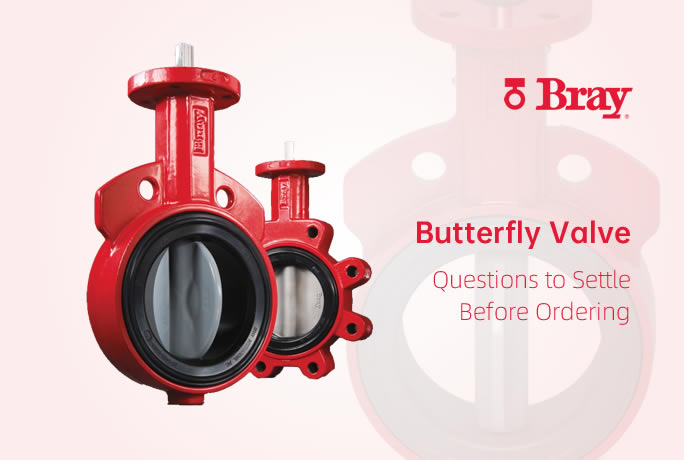
Yes, and it is decided by your piping plan more than by the valve. A wafer body (Bray Series 20, 22, 30, 32) is sandwiched between two flanges and relies on the pipe bolts to hold it in — cheapest and lightest, but if you pull one side of the pipe away for maintenance, the valve drops. A lug body (Series 21, 23, 31) has bolt lugs threaded into the body, so the downstream pipe can be dismantled while the valve stays in the line and holds isolation. If anyone ever services equipment downstream of the valve without draining the whole loop, pay the extra for lug.
Q: Which series handles aggressive chemicals — is the 22/23 really different from the 20/21?
The 20/21 is the general-purpose resilient seated valve: elastomer seat, stainless or coated disc. The 22/23 is the PTFE-lined version for corrosive duty — the disc is stainless steel encapsulated in a minimum 1/8 inch of pure PTFE, PFA or UHMWPE, with an isostatically molded PTFE seat and a PTFE capsule isolating the stem. Shutoff is bidirectional bubble-tight, sizes run NPS 2 to 24 (DN 50 to 600) at 150 psi (10 bar), media temperature from -18 to 200 °C depending on the seat, and the stem is 17-4 PH stainless. If the wetted parts must survive the chemical, the whole wetted surface has to be fluoropolymer — that is the 22/23.
Q: How much pressure do these valves actually hold, and why does the same valve seem to have three different ratings?
Because size and installation position both derate the rating. Across the resilient seated range: Series 20/21 and 22/23 hold 150 psi (10.3 bar) in sizes 1-20 inch and 2-24 inch; Series 30/31 goes to 175 psi (12 bar) in 2-12 inch, dropping to 150 psi in 14-20 inch; the Series 31H lug reaches 250 psi and the 31U lug 285 psi (20 bar) in 2-12 inch. Big sizes drop hard — Series 32 wafer is rated 75 psi (5.2 bar) in 22-36 inch. And every size loses roughly half its rating at end-of-line service (a 2-12 inch lug valve on the end of a pipe holds 75 psi, not 175). Quote the rating for your actual size and position, not the brochure headline.
| Series | Body | Sizes | Rating | Seat |
|---|---|---|---|---|
| 20 / 21 | Wafer / Lug | 1"-20" | 150 psi | Elastomer |
| 22 / 23 | Wafer / Lug | 2"-24" | 150 psi | PTFE lined |
| 30 / 31 | Wafer / Lug | 2"-20" | 175 / 150 psi | Elastomer |
| 31U / 31H | Lug | 2"-20" | 285 / 250 psi | Elastomer |
| 32 / 33 | Wafer | 22"-36" | 75 / 150 psi | Elastomer |
Q: Which seat material for my fluid?
Bray picks seats by medium and temperature. BUNA-N for oils and fuels, EPDM for water and hot water (peroxide-cured EPDM runs from -29 to +121 °C), FKM for aggressive media, and polyurethane or neoprene for abrasive slurries. On the 22/23 the choices are virgin PTFE, conductive PTFE (where static discharge matters) and UHMWPE (for abrasive chemical duty, up to about 85 °C). If you are between two materials, the seat temperature chart in the Bray brochure decides it faster than any datasheet argument.
Q: Can I bolt my own actuator straight on?
Yes — every Bray resilient seated valve carries an ISO 5211 top flange, so handles, gear operators and pneumatic or electric actuators mount directly with no brackets, in the workshop or in the field. The extended neck on all sizes leaves 2 inches (50 mm) of pipe insulation clearance and keeps the actuator out of the paint booth. Blowout-proof stems come as standard: the shoulder-machined stem is pressed into the disc during assembly, so there are no external disc screws or pins to shake loose. The whole resilient seated range — series 20 through 36, up to 120 inch double flanged — is documented in Bray's official B-1050 brochure if you want the full torque curves and bolt patterns.