



Specifying a Valpres Ball or Butterfly Valve: Seven Steps Before You Order
Most valve complaints that reach us are not failures of the valve at all — they are mismatches decided at ordering time. Valpres has been making steel and special-alloy valves in the Brescia area since 1978, now inside the Bonomi Group, and the range is wide enough that the same DN can be ordered a dozen different ways. These are the steps we walk through with a customer before a purchase order is raised; they take ten minutes and save a fortnight of returns.
- Write down the line conditions first, not the valve model. DN, pressure class, medium, concentration, normal and maximum temperature, and whether the flow is continuous or intermittent. A valve is only ever as good as this list, and half the sizing errors we see come from a missing temperature or an assumed pressure class. If the line is steam or a caustic service, say so now — it changes seat material, not just body material.
- Choose the body style by how often someone will open it. Threaded two-piece and three-piece ball valves in 1/4 in to 4 in cover most small utility lines, and the three-piece pattern is worth the extra cost anywhere the valve gets cleaned or swapped on a shutdown schedule. Wafer and lug butterfly designs handle the larger lines where space between flanges is tight. Flanged and trunnion-mounted ball valves take over from 1/2 in to 8 in and above when pressure class or operating torque grows.
- Match the body material to the medium rather than to habit. CF8M stainless is the default for water, mild chemicals and food-grade service; carbon steel A105 is the sensible budget choice where the medium is clean and non-corrosive; special alloys exist for chlorides, seawater and aggressive process streams. Do not pay for 316 where carbon steel would last twenty years, and do not put carbon steel into a line that will be flushed with chlorinated water.
- Settle the seat and seal question before the price. PTFE seats cover the great majority of industrial duty, with modified PTFE and TFM grades for higher cycling or higher temperature, and FKM O-rings where oils and hydrocarbons are involved. This is the single line item that decides whether the valve still seals after two thousand operations, so it is the last place to accept a substitution.
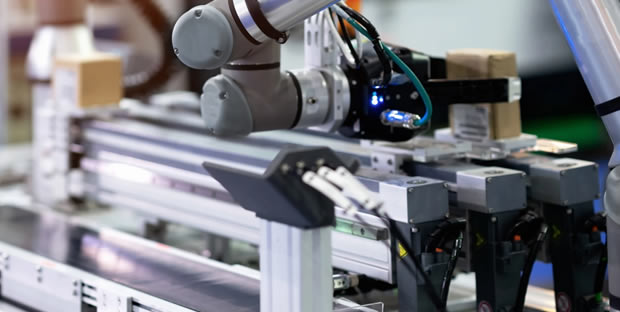
- Decide actuation now, not after installation. Every Valpres ball valve that may later be automated should be bought with the ISO 5211 mounting pad, even if it ships with a lever. That pad costs very little at order time and is the reason a manual valve can become a pneumatically actuated one without changing the valve body. Specify the actuator torque from the valve breakaway torque at the real differential pressure, not from the nominal figure in a brochure.
- Check the approval column against the site, not the catalogue headline. ATEX documentation for flammable or dust atmospheres, fire-safe design for hydrocarbons, TÜV testing where the insurer asks for it. On the 700006 Inox-Val stainless valve, for example, fire-safe and ATEX versions are available on request — which means they must be stated on the order, not assumed from the standard datasheet.
- Walk the order code backwards before you send it. Read the finished code out loud as a sentence: size, body style, material, seat, connection, actuation, options. Nine ordering mistakes out of ten show up here, usually as a size that does not exist in that body style or a pressure class that the chosen connection cannot deliver.
Two field notes to finish. On new installations, flush and deburr the line before the valve goes in; most premature seat damage we inspect is swarf from pipework, not wear from service. And on actuated valves, set the travel limits against the actual valve rather than the actuator's nominal stroke, then confirm the fail-safe direction with the air supply removed — a valve that closes on air failure when the process needs it open is a design fault that only appears during a plant trip.
Where a valve has to be replaced in-line rather than on a shutdown, tell us at the enquiry stage. Body style and end connection can often be selected so that internals or the complete valve can be swapped without cutting the pipe, and that decision is much cheaper to make before the order than after.