


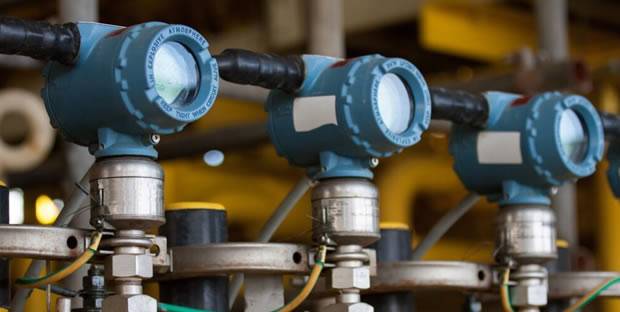


How to Match a WIKA A-10 Transmitter to Your Line Pressure Without Overbuying
The most expensive WIKA pressure transmitter mistake is not buying the wrong brand — it is picking a range that looks impressive on the order form. The A-10 is offered from a few bar up to 0…1000 bar gauge, and buyers routinely select a range matching the pipe's maximum rating instead of the pressure the line actually runs at. The problem is resolution and accuracy: the transmitter's stated 0.5% BFSL applies to full span, so a 0…25 bar unit monitoring a line that lives at 4 bar is reading that 4 bar with an error band stretched across 25 bar. Pick the smallest standard range that still leaves headroom above your working pressure, and the same instrument suddenly looks twice as precise.
Headroom matters for a different reason, too. The A-10 tolerates brief overpressure on the order of 1.5 to 2 times full span depending on the range, but a pump start or a fast-closing valve can spike well beyond that. Water hammer does not care about datasheet limits, and a cracked 316L diaphragm is a replacement, not a repair. If the loop sees pulses, order the version with a mechanical damping element in the pressure port or add an orifice upstream. Electronic filtering in the PLC smooths the display but does nothing for the diaphragm sitting downstream of the shock.
Media compatibility is the second filter to run before ordering. The standard A-10 wets with 316L stainless on the diaphragm and housing, which happily handles hydraulic oil, compressed air, water and most mild process fluids. Anything with chlorides, strong acids or caustics deserves a compatibility check against WIKA's chemical resistance tables — or a diaphragm seal ahead of the transmitter, which moves the wetted surface to a membrane and fills the gap with oil. It costs more than a plain A-10 but far less than replacing corroded transmitters every quarter.
On the electrical side, the A-10 ships either as a two-wire 4…20 mA current loop (supply 8…30 V DC) or a three-wire 0…10 V output, selected at order time — one unit cannot do both. Two-wire current loops win in industrial plants for good reason: the signal ignores voltage drop over long cable runs and opens a recognizable fault when the loop breaks. With either variant, keep the signal cable away from power cables and ground the shield at one end only, or you will chase phantom noise that looks like drifting zero point.
Installation details finish the job. Mount the instrument upright with the pressure port down where condensate and debris can drain away from the diaphragm rather than pool against it. Standard medium temperature is 0…+80 °C on the base model, with extended variants reaching further — if the line runs hotter than that, a siphon or standoff cools things down instead of cooking the electronics. Tighten the process connection with a second wrench holding the hexagon flat, never by twisting the housing itself, and the A-10 will spend years quietly doing the one number it was sized to do.