



Hong Kong Accelerates Smart Manufacturing as Industry 5.0 Takes Center Stage
As the global manufacturing sector transitions into the era of Industry 5.0—a paradigm defined by human-machine collaboration, sustainability, and hyper-personalization—Hong Kong is positioning itself as a trailblaer in smart manufacturing innovation. Leveraging its unique strengths in technology, academia, and cross-border collaboration, the city is spearheading projects that integrate artificial intelligence (AI), robotics, and advanced connectivity to redefine industrial production.
Human-Machine Symbiosis: The Core of Industry 5.0
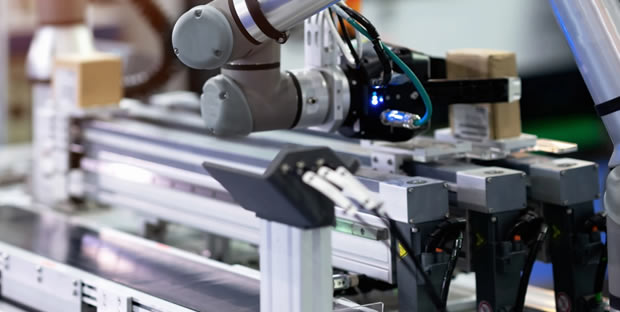
At the forefront of Hong Kong’s push is the groundbreaking “Mutual Cognition Human-Robot Collaboration System” developed by researchers at The Hong Kong Polytechnic University (PolyU). Led by Professor Zheng Pai, the system enables robots to perceive complex environments, interpret human intentions through multimodal sensors (vision, touch, language), and autonomously adapt tasks via machine learning. Unlike traditional pre-programmed robots, these machines learn through demonstration and can generate industrial code in real time, achieving precision errors below 0.01 millimeters in tasks like aircraft component drilling and electric vehicle battery disassembly.
“The goal is to create robots that evolve alongside humans, not replace them,” said Professor Zheng. “By combining human creativity with machine precision, we’re unlocking new efficiencies in high-value manufacturing.” The system has already been deployed in aerospace and automotive sectors, with plans to expand into medical device production.
AI-Powered Satellite Manufacturing: A Global Benchmark
Hong Kong’s ambitions extend beyond Earth. Intercontinental Aerospace Technology Group, headquartered in the Hong Kong Science Park, has revolutionized satellite production by integrating AI across the entire lifecycle—from design to in-orbit operation. Using generative AI and digital twins, the company slashed development cycles by 60% and reduced costs by 80%, raising annual capacity to 500 satellites.
Key innovations include:
Onboard AI processors enabling satellites to analyze data autonomously, supporting applications like disaster prediction and low-altitude economy monitoring.
A global manufacturing network spanning Thailand, Malaysia, and Spain, producing localized components to bridge the digital divide in emerging markets.
“This isn’t just about building satellites faster—it’s about democratizing access to space technology,” said Wen Yichuan, founder of Intercontinental Aerospace. The company’s 6,000-satellite constellation plan with the Arab Information and Communication Organization (AICO) aims to provide affordable internet to Africa and the Middle East by 2030.
“Hong Kong’s role is to be a ‘super connector’ for global tech ecosystems,” said Sun Dong, Secretary for Innovation, Technology, and Industry. The city’s five globally top-ranked universities and AI supercomputing center provide a talent pipeline and infrastructure that “turn research into scalable solutions.”
Biotech and Beyond: A Holistic Vision
Industry 5.0 in Hong Kong transcends manufacturing. The upcoming Hong Kong Centre for Medical Product Regulation (CMPR) will grant the city autonomous drug approval authority, accelerating biotech innovations. Meanwhile, Hong Kong Applied Science and Technology Research Institute (ASTRI) is developing autonomous logistics drones and smart traffic systems, integrating 5G and edge computing to optimize urban mobility.
Challenges and the Road Ahead
Despite progress, challenges persist. 81% of local manufacturers still lack smart production systems, citing costs and workforce reskilling as barriers. However, initiatives like ASTRI’s mixed-reality (MR) headsets—which guide workers via real-time data overlays—are bridging this gap.
“The future of industry isn’t about machines versus humans—it’s about augmenting human potential,” said Fung Man-cheong, a biotech industry veteran. “Hong Kong’s blend of academic rigor, entrepreneurial spirit, and global connectivity makes it the ideal launchpad for this revolution.”
As Industry 5.0 reshapes global value chains, Hong Kong’s strategy—rooted in collaboration, sustainability, and inclusivity—offers a blueprint for cities aiming to thrive in the age of intelligent automation.